
Information Services Department Holds Two-Day Training on Corporate Communications and Crisis Management
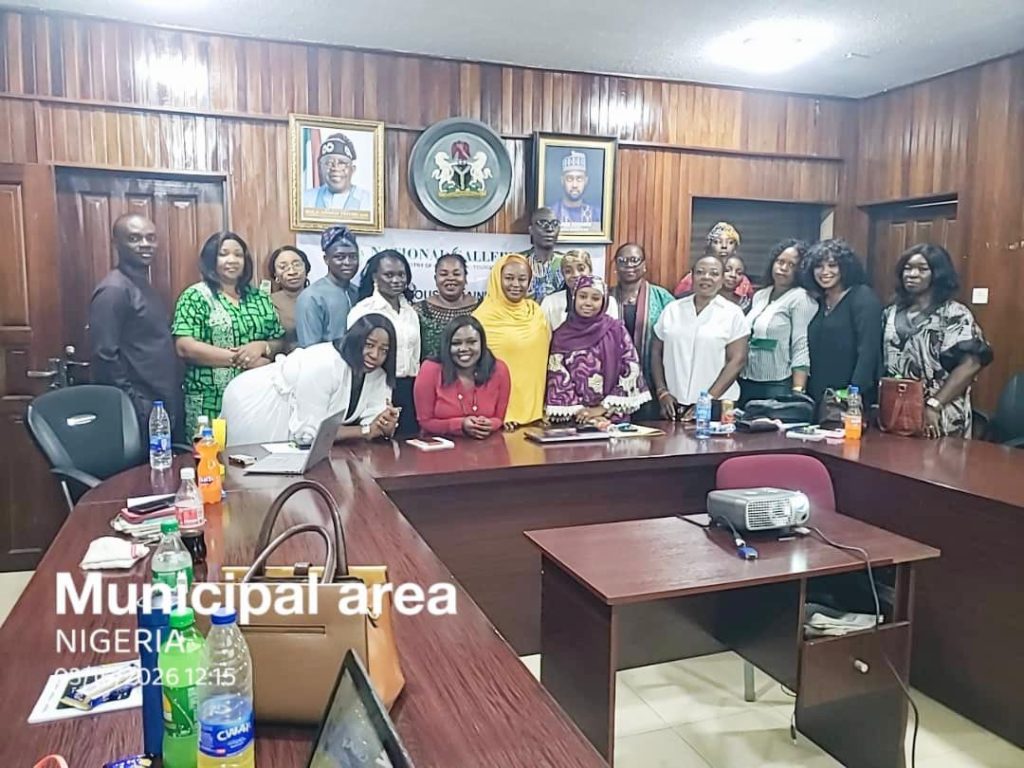
The Information Services Department has just conducted a two-day in-house training on corporate communications, focusing on strengthening public relations and crisis management capacity among its staff.
The training, themed “Public Relations, Crisis and Incident Communication for the Organization,” was held from March 16th to 17th, 2026 at the organization’s board room. It brought together participants from the headquarters and FCT office, to enhance their understanding of effective communication strategies and reputation management in today’s dynamic environment.
The training was designed to equip staff with essential skills in public relations, corporate communication, and crisis response. Throughout the sessions, participants were introduced to the core principles of public relations, including transparency, accountability, ethical communication, and relationship management. These principles were emphasized as critical tools for building trust, maintaining a positive organizational image, and achieving institutional goals.
A major highlight of the training was on writing for public relations, where participants learned how to develop clear, accurate, and engaging writing skills. Various formats such as press releases, media pitches, social media messaging, and crisis statements were explored, with a focus on clarity, consistency, and audience engagement.
Sessions also addressed key communication strategies, including proactive communication, consistency in messaging, media relations, crisis preparedness, and digital engagement. Facilitators stressed the importance of maintaining timely and credible communication across all platforms.
Participants were further trained on media relations and press management, with emphasis on building professional relationships with journalists, understanding media operations, and responding promptly and transparently to media inquiries. Best practices such as preparing spokespersons, crafting compelling press materials, and monitoring media coverage were also discussed.
In addition, the training examined the communication process, highlighting how information flows effectively from sender to receiver through proper channels, feedback, and interpretation.
Strategic public relations planning was another key component, where participants were introduced to tools such as SWOT and PEST analysis, as well as the development of SMART objectives, audience identification, message design, channel selection, and performance evaluation.
A significant focus of the programme was on crisis communication and management. Participants were taught that a crisis can arise from unexpected events such as negative publicity, public scandals, data breaches, workplace incidents, or social media backlash, all of which can threaten an organization’s reputation and operations.
To manage such situations, the training outlined practical steps including assessing the situation, gathering verified information, developing key messages, engaging stakeholders, monitoring public reactions, and providing timely updates. Participants were also guided on tailoring communication to different audiences such as employees, media, partners, and the general public.
Facilitators emphasized key principles of effective crisis communication—speed, accuracy, transparency, consistency, and empathy—alongside the “3Cs” of messaging: Compassion, Control, and Commitment.
The training concluded with insights on immediate response actions, including verifying information, notifying relevant stakeholders, and promptly acknowledging incidents to maintain public confidence.
Overall, the two-day training reinforced the importance of strategic communication, strong stakeholder engagement, and swift, responsible responses to crisis as essential elements for protecting organizational reputation and ensuring long-term success.
Departments of Curatorial Services and Documentation & Monitoring

NGA DEPARTMENTS SEEK CLOSER WORKING RELATIONSHIP FOR EFFECTIVE SERVICE DELIVERY
Departments of Documentation and Monitoring (D&M) and the Curatorial Services Departmen tCS) during an interactive session today stress the need for cordial working relationship between the two strategic departments.
Speaking at the meeting themed: “Mock Documentation”, the Deputy Director D&M, Dr. Uche Nnadozie in his opening remarks noted that the relationship woulld foster growth and improve productivity and Monitoring in the discharge of thier unique responsibility of documenting the works of Art in the National Collection in line with the set standard by International Council Of Museum(ICOM) and also encourage professionalism in the handling of these precious National treasures.
In her response, Mrs Pilaku Lilian , Asst.Director and Head of Division, National Collection in Curatorial Services Department, supported the need for synergy between both departments, noting that CS department were not in competition with the D&M., though the functions of the two departments are interwoven.
Mrs Okoye Geraldine, Asst. Director D&M, affirmed that it was because of the aforementioned assertions that it became necessary that an intentional and concerted effort be made by staff of the two departments to foster a cordial working relationship in other to achieve a reliable data base for NGA.
Demonstating the relationship between the two departments, Mrs Pilaku Lilian used a two dimensional and a three dimensional works of Art, comprising of a drawing and a metal sculpture to illustrate the unique documentation of works of Art relative to their department ( CS), while Mrs. Okoye Geraldine utilized chart format of Accession Register relative to D&M
The meeting ended on a more friendly atmosphere with both departments resolving to forge closer ties to help the organisation achieve it’s mandate.