Digital Era begins for Nigerian Art as National Gallery Of Art debuts online platform
DIGITAL ERA BEGINS FOR NIGERIAN ART AS NATIONAL GALLERY OF ART DEBUTS ONLINE PLATFORM
By Chinwe Nwude
L-R
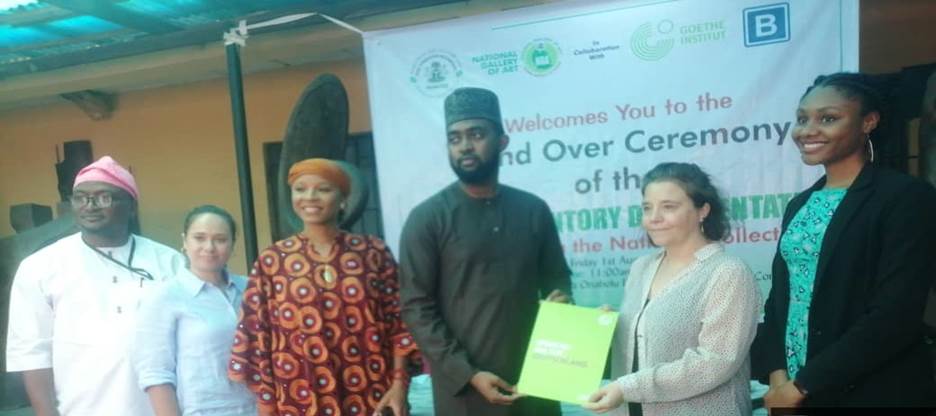
Mr. Emmanuel Egbenuka and Ms. Vera Parmi, both representatives of Julius Berger, Hon. Aisha Augie, DG Centre for Black and African Arts and Civilization (CBAAC), Mr. Ahmed Sodangi DG National Gallery of Art (NGA), Dr. Nadine Siegert Director Goethe-Institut Nigeria, Mrs. Udochukwu Okeahialam of German Consulate, Lagos.
Photo: Olawunmi Olamide
The Director-General of the National Gallery of Art (NGA), Mr. Ahmed Bashir Sodangi, delivered a strategic overview during the official handover ceremony of the digital inventory documentation of artworks in Nigeria’s national collection. The event held on Friday, August 1, 2025, in Lagos, marked the successful completion of NGA’s digital inventory documentation project, a landmark initiative undertaken in collaboration with Goethe-Institut Nigeria. The event brought together key stakeholders from the cultural and diplomatic communities, development partners, media representatives, and NGA leadership and staff.
Mr. Sodangi traced the project’s origins to the April 2024 ministerial retreat, emphasizing its alignment with national cultural preservation goals. He underscored the historical and civic importance of the National Collection—priceless artworks acquired with public funds that, for decades, have remained largely hidden from public view.
“This digital inventory is the first step in restoring, valuing, and eventually exhibiting our collections to the world,” he stated.
The Director-General announced that documentation efforts will soon expand to Abuja, where an estimated 700 to 800 additional works are awaiting cataloguing. He also revealed that the NGA had recently signed a Memorandum of Understanding with Google Arts & Culture, aimed at further expanding global digital access to Nigeria’s artistic heritage.
Looking to the future, Mr. Sodangi emphasized the urgent need for a dedicated NGA edifice and modern storage infrastructure to ensure the long-term preservation of these national treasures. He reiterated the importance of the National Collection as a cornerstone of Nigeria’s cultural identity, and announced plans to launch a dedicated Art Management Platform on the NGA’s official website.
He acknowledged that the project’s success was made possible through a collaborative effort between the NGA, the Goethe-Institut, and Julius Berger, with additional support from a wide range of local and international partners.
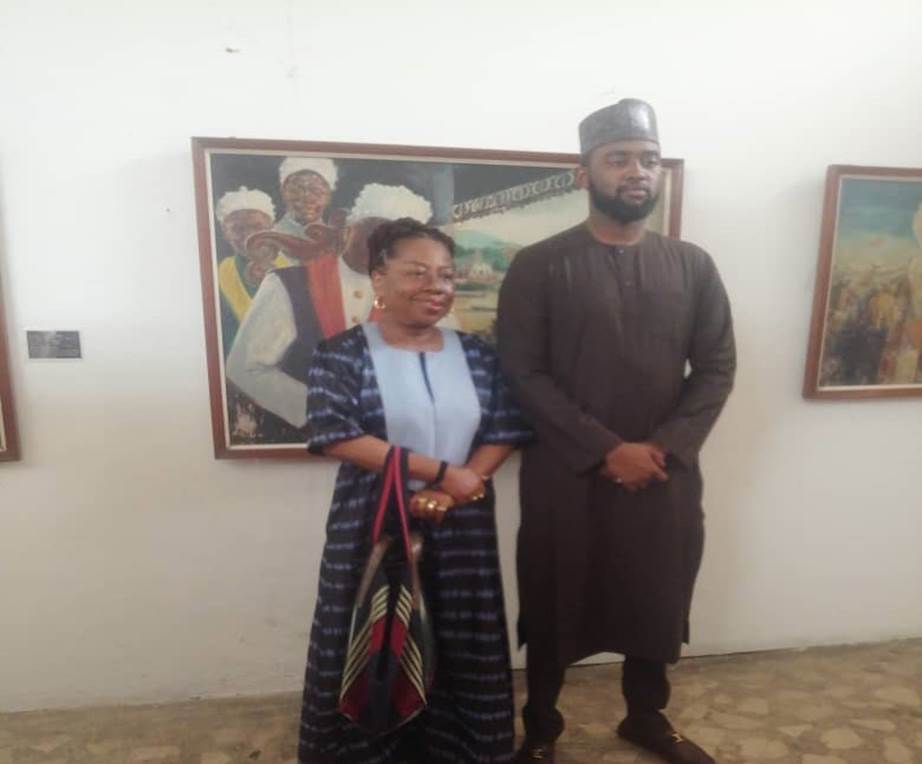
DG NGA with Ndidi Dike, a renowned Nigerian female visual artist.
Photo: Olawunmi Olamide
The Director-General of the Centre for Black and African Arts and Civilization (CBAAC), Hon. Aisha Augie, commended the National Gallery of Art (NGA) for its leadership in advancing art inventory development in Nigeria. She pledged CBAAC’s support in promoting and showcasing the documented collection on international platforms, reinforcing the shared commitment to preserving and projecting African cultural heritage globally. In her words,
“CBAAC is here for Africa and we believe Nigerian art has always led globally. NGA is the custodian of that legacy and we stand firmly in partnership to globalize our heritage.”
Dr. Nadine Siegert the Director of Goethe-Institut Nigeria, expressed appreciation for the warm reception and collaborative spirit shown by NGA staff throughout the project. She emphasized that mutual trust and openness were key to the initiative’s success.
Dr. Siegert highlighted the global significance of the newly developed digital database, noting that it enables researchers, curators, and institutions worldwide to access Nigeria’s art collection—unlocking opportunities for funding, scholarly collaboration, and international exhibitions.
“It creates new opportunities for researchers, for curators, for art lovers. For the first time, people can see what is actually in the collection—the name of the artist, the date of the artwork, its condition, its story. And in this collection, you will find masterpieces.”
She also announced that a restored artwork from the NGA collection will be featured in a major art show in London this October, signaling a renewed international spotlight on Nigerian art.
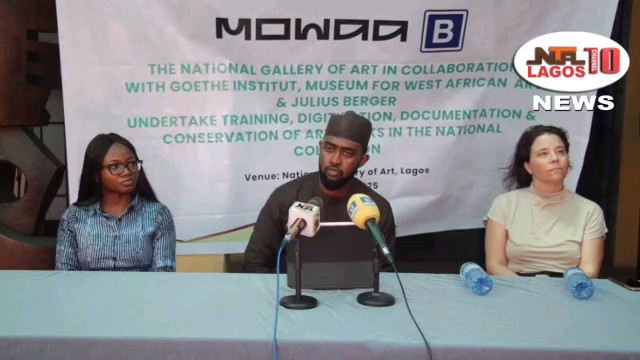
Mr. Tobi Bolaji Idowu, the Project Coordinator provided a detailed account of the documentation project’s evolution. Initially conceived as a support initiative for an exhibition following the renovation of the National Theatre, the project quickly expanded after the team identified significant gaps in the existing inventory.
Over the course of four months, the Goethe-Institut team worked closely with NGA staff to photograph and catalogue 1,191 artworks, creating a searchable digital inventory that greatly improves collection accessibility.
“This work forms a skeleton for the future. It’s a resource for researchers, curators, and students, and it opens doors to the works of Nigerian artists dating as far back as the 1960s,” Mr. Idowu noted.
He praised the NGA team’s dedication and announced a forthcoming comprehensive project report detailing the process, methodology, and key outcomes.
Also present at the ceremony were Ms. Vera Parmi representative of Julius Berger and Mrs. Udochukwu Okeahialam representative of the German Consulate, Lagos. Ms. Parmi acknowledged the project’s significance and affirmed Julius Berger’s commitment to supporting future cultural initiatives. Mrs. Okeahialam commended the project, highlighting the vital role of art in reflecting societal values and its contribution to the economy through accurate valuation.
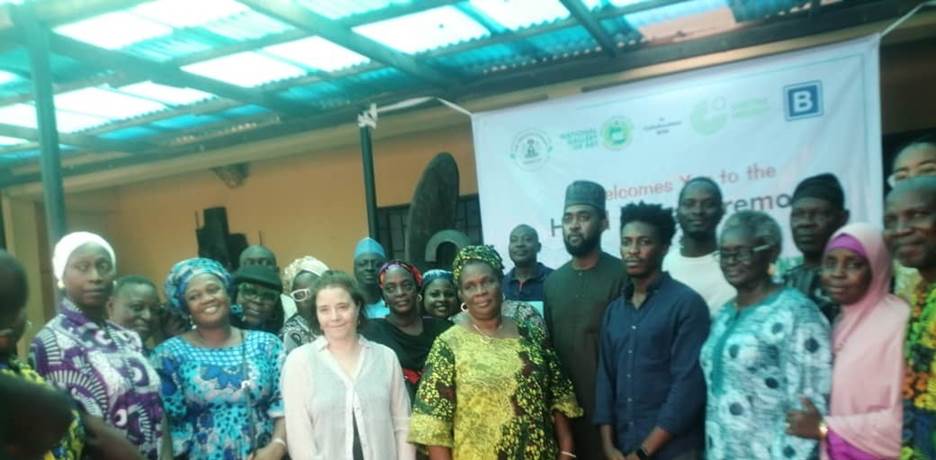
DG NGA with some NGA staff and Goethe-Institut staff.
Photo: Olawunmi Olamide
The handover ceremony represents a pivotal milestone in the National Gallery of Art’s ongoing journey toward modernization and enhanced global relevance. By successfully completing the digital inventory documentation project, the NGA has not only showcased Nigeria’s rich and diverse cultural heritage but has also laid a strong foundation for the future. This foundational work will significantly improve accessibility, enabling researchers, curators, students, and art enthusiasts both within Nigeria and around the world to explore and engage with the collection like never before.
Moreover, the project facilitates more accurate valuation of the artworks, unlocking their cultural and economic potential and contributing to the broader recognition of Nigerian art in the global art market. It also serves as a vital educational resource, fostering deeper appreciation and understanding of Nigeria’s artistic legacy among current and future generations.
Looking ahead, this initiative paves the way for expanded collaborations, exhibitions, and restoration efforts, ensuring that Nigerian art continues to be preserved, celebrated, and projected onto the world stage. The NGA’s commitment to leveraging technology and partnerships positions it as a leading institution in Africa’s cultural renaissance, inspiring confidence that Nigeria’s artistic heritage will thrive for decades to come.
The handover ceremony represents a pivotal milestone in the National Gallery of Art’s ongoing journey toward modernization and enhanced global relevance. By successfully completing the digital inventory documentation project, the NGA has not only showcased Nigeria’s rich and diverse cultural heritage but has also laid a strong foundation for the future. This foundational work significantly improves accessibility, enabling researchers, curators, students, and art enthusiasts both within Nigeria and around the world to explore and engage with the collection like never before.
Moreover, the project facilitates more accurate valuation of the artworks, unlocking their cultural and economic potential and contributing to the broader recognition of Nigerian art in the global art market. It also serves as a vital educational resource, fostering deeper appreciation and understanding of Nigeria’s artistic legacy among current and future generations. Looking ahead, this initiative paves the way for expanded collaborations, exhibitions, and restoration efforts, ensuring that Nigerian art continues to be preserved, celebrated, and projected onto the world stage. The NGA’s commitment to leveraging technology and partnerships positions it as a leading institution in Africa’s cultural renaissance and inspires confidence that Nigeria’s artistic heritage will thrive for decades to come.
Since assuming office in March 2024, the Director-General of the NGA has taken strategic steps to redefine the agency’s mission and align it with national priorities. He initiated a strategic roadmap to ensure that the goals of the NGA were in step with the presidential and ministerial agenda. This began with a critical evaluation of the institution’s mandate, its current role, and how it could better serve Nigeria’s dynamic and growing art ecosystem.
To achieve this, four strategic pillars were introduced. The first focused on policy reforms aimed at clarifying and strengthening the NGA’s institutional framework. The second centered on strategic collaboration and fundraising, leading to significant partnerships with institutions such as Goethe-Institut, Google Arts & Culture, and the Centre for Black and African Arts and Civilization (CBAAC) amongst others. These alliances are not only enhancing the NGA’s capacity but also expanding its reach and visibility globally.
The third pillar addresses digitalization and modernization. Under this initiative, the NGA has developed a comprehensive digital inventory of the National Collections, built an art management platform for online access, and is in the process of upgrading its website to serve as a hub for digital engagement. These efforts are supported by the National Art Programme, which includes plans to establish art exchange platforms and generation hubs across the country to stimulate grassroots engagement and creativity.
A key focus has also been placed on the restoration and valuation of the National Collections, which are central to the NGA’s mandate. Many of these artworks, purchased with public funds, have remained unseen for decades due to inadequate storage and the absence of a proper exhibition facility. The current administration has undertaken the vital task of assessing their condition, assigning value, and creating a secure digital record for future reference and preservation.
Looking forward, the NGA is focused on two major infrastructural goals. The first is to secure a permanent head office that will also serve as a national exhibition space for the collections. The second is to improve the storage facility in Lagos, ensuring that all artworks are properly conserved according to international best practices.
Together, these steps signal a new era for the National Gallery of Art—one marked by innovation, inclusion, and international collaboration. The institution is now better equipped to fulfill its mandate of preserving and promoting Nigeria’s visual arts heritage in ways that resonate both locally and globally.
Bottom of Form