NAME: CHRISTOPHER UCHEFUNA OKEKE
NATIONALITY; NIGERIAN
BIRTH: APRIL 30TH, 1933
DEATH; JANUARY 6TH, 2016
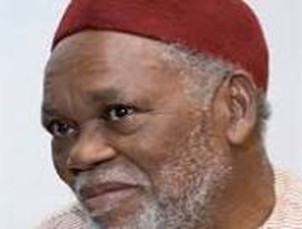
Uche Okeke was born on April 30, 1933, in Nimo, Anambra State, Nigeria. His parents were Isaac Okonkwo Okeke and Monica Mgboye Okeke. He is one of the most important figures in modern African art. He worked as a painter, sculptor, teacher, illustrator, and art thinker. His love for Igbo culture grew through stories his mother and sister told him. He later found out that his mother was a Uli artist.
EDUCATION –
St. Peter Claver’s Primary School, Kafanchan (1940–1948) –
St. Patrick’s School, Emekuku, Owerri (1950-1954) –
Nigerian College of Arts, Science and Technology (NCAST) (now Ahmadu Bello University, Zaria) (1957–1961)
ACADEMIC CAREER AS EDUCATOR
He is distinguished in shaping others. He was appointed as Professor and Head of the Department of Fine and Applied Arts at the University of Nigeria, Nsukka in 1971, where he worked with colleagues and students to develop a distinct style that became known as the Nsukka School, (MoMA). At the University of Nigeria Nsukka, he was also elected Dean of the Faculty of Arts in 1979 and served his two-year term. In 1982, after his sabbatical leave, he was appointed Director of the Institute of African Studies, a post he held until his retirement in 1986. Even after retiring, Okeke did not stop teaching. He served as Visiting Professor and External Examiner at the University of Port Harcourt, Ahmadu Bello University Zaria, and Obafemi Awolowo University, sharing his knowledge and experience with students across Nigeria.
THE ZARIA ART SOCIETY & “NATURAL SYNTHESIS”
Uche Okeke co-founded the Zaria Art Society alongside Bruce Onobrakpeya, Demas Nwoko, Yusuf Grillo, Simon Okeke, and Jimoh Akolo. Together, they embarked on a retrospective tour of their indigenous cultures to fuse local content with Western techniques. Okeke called this fusion “natural synthesis. Moving away from traditions steeped in colonialism, “natural synthesis” merged Indigenous art traditions, forms, and ideas with ones from Western cultures to create a uniquely Nigerian aesthetic perspective.
The compelling style of Okeke’s essays earned the group of young students the title “Zaria Rebels”.
ARTISTIC STYLE
Uche Okeke drew deeply from uli, the Igbo wall and body decoration tradition transforming its flowing, organic line into modern compositions of symbolic form and abstraction.
SOME ICONIC ART WORKS –
Ana Mmuo(Spirits of the Mask)
Maidens cry
Tutu (1973)
Oja Suite
The “African Mona Lisa”
Anyanwu (1954-55) – Symbolizing the Igbo sun god
Queen Elizabeth II (1956) – A notable bronze commission
Risen Christ (1986)
The missionary and the Masquerades
A major wood carving – Negritude series – A celebration of Black identity
UCHE OKEKE EXHIBITION
Some Major Exhibitions – Zwemmer Gallery, London (1937)
Musee d’Art Moderne, Paris (1946)
US Tour (1950) – Nigerian Independence show (1960)
Whitechapel Art Gallery (1995)
Frieze Masters (2020, 2023l
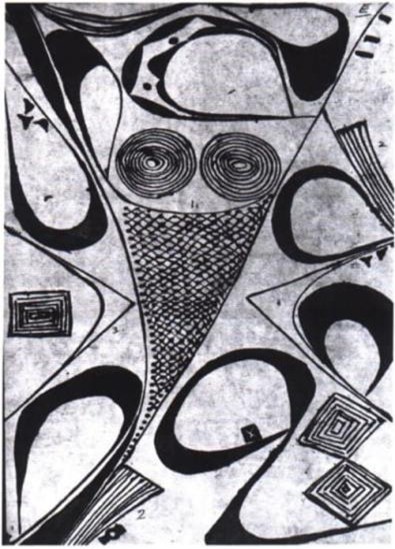
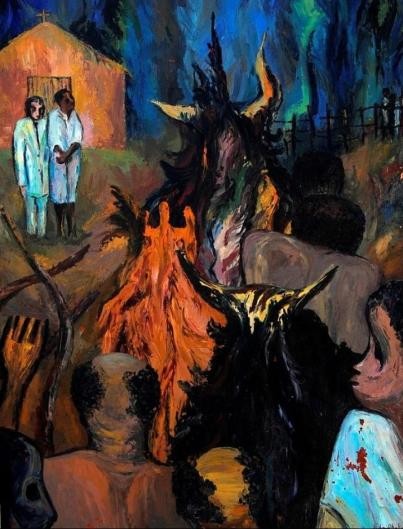
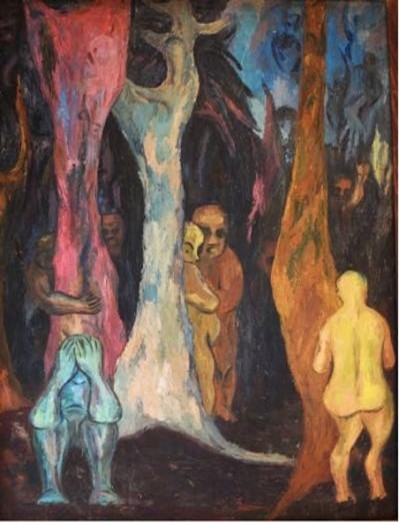
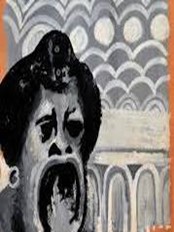
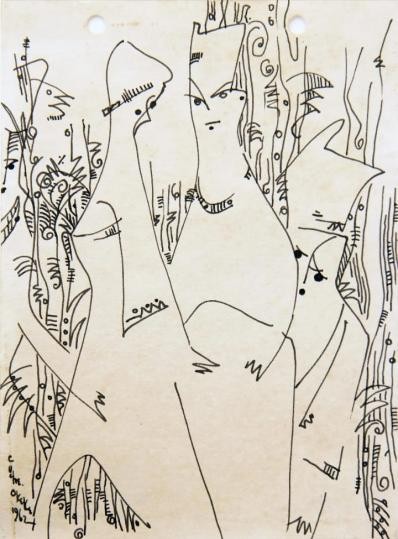
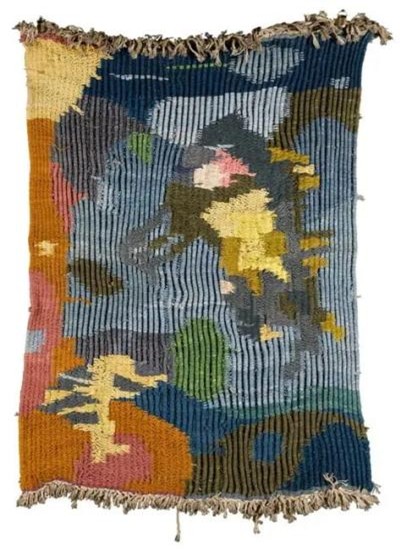
Artworks.
SOME AWARDS AND HONOURS
MBE (1954/55)
OBE (1971)
Nigerian National Order of Merit (1980) –
Honorary Doctorate, Ahmadu Bello University (1969) –
Crater on Mercury named after him.
RETIREMENT
Uche Okeke served at the University of Nigeria, Nsukka from 1970 to 1985 where he held key positions including Dean of Arts and Director,Institute of African Studies. He retired from full time University service in 1985, though he continued working as a visiting professor and external examiner till 2006.
BY: FIDELIS, CHINYERE GIFT
PLANNING AND RESEARCH (NATIONAL GALLERY OF ART)