BIOGRAPHY
Abayomi Barber 23 October 1928 – 26 December 2021
Introduction
Abayomi Barber was one of Nigeria’s most respected and influential artists, widely known for his exceptional mastery in painting and sculpture. He is celebrated for his strong advocacy for technical excellence, discipline, and professionalism in the visual arts. Over the decades, Barber has contributed significantly to the development of modern Nigerian art, particularly through his emphasis on academic realism and structured artistic training.
His works reflect a deep understanding of form, anatomy, and composition, making him a leading figure among artists who prioritize skill-based artistry. Beyond his personal creations, Barber’s legacy is strongly tied to his role as a mentor and teacher, shaping a generation of artists committed to excellence.
Early Life and Cultural Background
Abayomi Barber was born in 1934 in Ile-Ife, Osun State, a town widely regarded as the cradle of Yoruba civilization. Growing up in this culturally rich environment, he was exposed to traditional African art forms, symbolism, and craftsmanship from an early age.
His early exposure to indigenous artistic traditions helped shape his appreciation for structure, balance, and cultural identity. However, unlike many artists who leaned heavily toward traditional or abstract expressions, Barber developed a strong inclination toward realism and precision.
Education and Artistic Formation
Barber’s artistic journey took a major step forward when he travelled abroad to further his education. He studied at the prestigious Central School of Arts and Crafts in London, where he received formal training in fine arts. His time in the United Kingdom exposed him to classical European techniques, particularly in drawing, painting, and sculpture.
During his studies, Barber developed a deep commitment to academic realism, emphasizing accurate representation, anatomy, proportion, and technical discipline. This foundation became the hallmark of his artistic philosophy.
Upon returning to Nigeria, he brought with him a strong conviction that Nigerian art should not only be expressive but also technically sound and globally competitive.
Artistic Style and Philosophy
Abayomi Barber is best known for his realist approach to art. His works are characterized by Strong anatomical accuracy, Detailed compositions, Balanced proportions, Careful attention to light and form.
Unlike many of his contemporaries who embraced abstraction or experimental styles, Barber firmly believed in structured artistic training and mastery of fundamentals before creative expression.
His philosophy emphasized that:
“Art must be built on skill, discipline, and knowledge.”
This belief led him to challenge trends that, in his view, encouraged artistic shortcuts or lack of technical rigor.
Major Works and Contributions
Throughout his career, Barber produced numerous paintings and sculptures that reflect his dedication to realism and cultural themes. His works often depict:
Human figures with lifelike precision
Portraits capturing emotion and identity
Cultural and historical themes
Although not as commercially publicized as some contemporaries, his works are highly respected within academic and professional art circles.
The Abayomi Barber School of Thought
One of Barber’s most important contributions is the establishment of what is often referred to as the “Abayomi Barber School”—a movement centered on disciplined, skill-based art training.
Through this initiative, he mentored many young Nigerian artists, instilling in them:Technical competence, Professional ethics,Dedication to artistic excellence
Many of his students have gone on to become successful artists, continuing his legacy of realism and structured training.
Awards and Recognitions
Abayomi Barber has received several recognitions for his contributions to Nigerian art and education. His influence is particularly acknowledged in Academic art institutions, Professional artist communities, Mentorship and training circles. He is widely regarded as a custodian of artistic discipline in Nigeria.
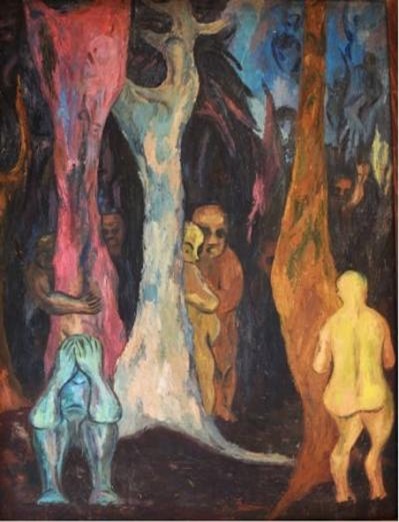
Some of Abayomi’s Collection
Dance 1964
MYOSSA IN BLUE (1971)
MUSICAL INSTRUMENTS (1971)
ALAGADA 1983
SEASCAPE 1993
CHARACTER STUDY 2008
HOURGLASS 1998
ARTSY 2020
Legacy and Impact on Nigerian Art
Abayomi Barber’s legacy lies not just in his artworks but in his philosophy and teaching. At a time when artistic expression was rapidly evolving, he stood firmly for Excellence over convenience, Skill over improvisation, Discipline over experimentation without foundation. His impact continues to shape Nigerian art education, particularly among artists who value realism and technical mastery.
Conclusion
Abayomi Barber remains a towering figure in Nigerian art history. His commitment to realism, discipline, and structured learning had set him apart as both an artist and an educator.
From his early beginnings in Ile-Ife to his international training and lifelong mentorship, Barber has consistently championed the importance of skill and professionalism in art. His legacy endures through his works and the many artists he has trained, ensuring that the standards of excellence he upheld continue to influence future generations.
By:
Albert Aribo
Planning and Research Department
National Gallery of Art (NGA)