Early Life & Artistic Development
Background: Benson Osagie was born in 1962 in Benin City, Nigeria, part of the post-independence generation of Nigerian artists.
Education & Teaching: He trained at the Federal Polytechnic, Auchi (1982–1986), where he later taught art, laying his academic and professional foundation.
Move to Lagos: In 1999, he moved to Lagos, the heart of the Nigerian art market, and had already participated in exhibitions at venues like Signature Gallery and the Didi Museum.
Artistic Voice & Philosophy
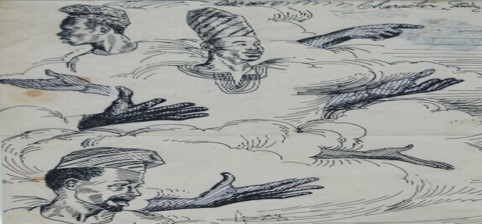
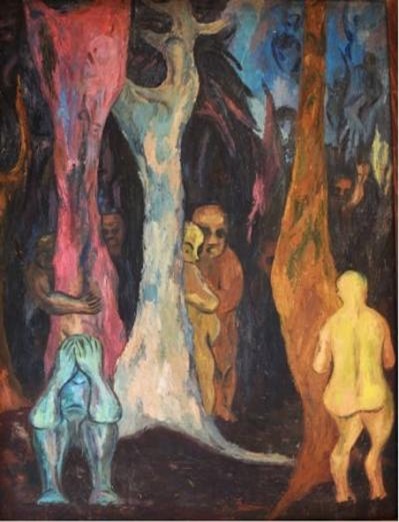
Draftsmanship & Narrative: Celebrated as “probably the most gifted draughtsman Nigeria has had in recent times,” he was above all a storyteller and “artist-seer” of his society, with works open to multiple interpretations.
Social Reality & Critique: For Osagie, the painting was a medium between the viewer and inescapable social reality, making his works inextricably “political” and focused on collective postcolonial experiences. Frustrated by Nigeria’s development, he famously asked, “How can somebody continue painting landscapes when we do not have electricity for days?”.
Style & Evolution: An independent artist and “social chronicler” angry about socio-political realities, his style was figurative yet highly expressive. He favored broad brushstrokes and flat, single-color backgrounds that allowed his figures to “float”. After 2012, his work moved decisively towards minimalist abstraction, using symbols and “suggesting rather than explaining” to invite viewer participation.
Process & Work Ethic: He emphasized the “force of waterfalls” to express thought and captured scenes in his memory to work from directly, believing in experiencing a scene firsthand before putting it on canvas. Independent from market dictates, he drew on diverse materials like newspapers and was a natural who didn’t care about trends.
Select Exhibition History
Solo Exhibition (2025): A commemorative solo exhibition, “Ben Osagiek – A Retrospective Journey,” was held at The Benin Art Gallery in Lagos, showcasing his enduring influence.
Select Group Exhibitions: His work was frequently featured at prominent galleries in Lagos, including:
· Signature Gallery
· Mydrim Gallery
· Didi Museum
· Russian Cultural Centre
List of Notable Artworks
Osagie’s creative output spanned over three intense decades, with some notable works including:
· Unfair Sentence 1 (2013) – acrylic on canvas, auctioned at Sotheby’s in 2023
· Kitchen psychology (1991) – oil on canvas
· Assorted Fruits – early work from his time at Auchi
· No Pain, No Gain 2 (c. 2012–2013) – part of a tribute series to daily workers
· Battle for Survival, Black Market, Absentee Father – works from his 2010 solo show, “Cascade”
· Prayer Warriors, Prison Foods, Pump Price – exhibited at Terra Kulture
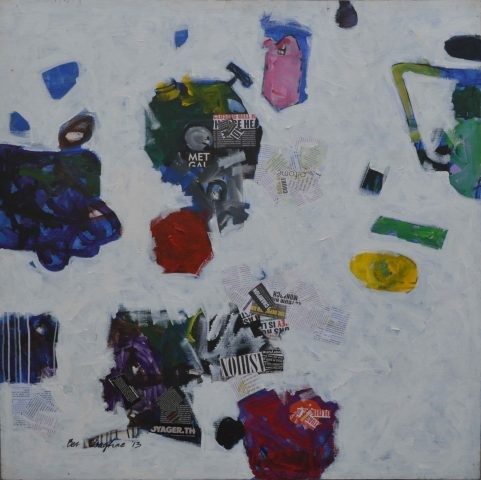
I beta pass my neighbour
NO PAIN NO GAIN
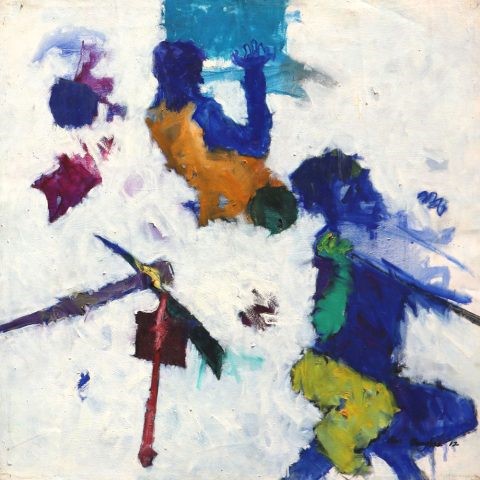
THE BANANAS
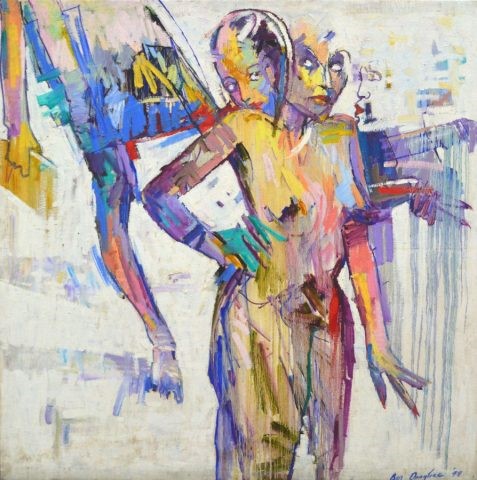
The young women league
Monographs & Legacy
Before his death in 2017, his approach had captured scholarly attention in a formal analysis of his “dialectical paintings” and was featured in a posthumous special edition of ART AFRICA. His legacy is securely preserved in major institutional publications and collections:
Visual Chronicle of a Society in Flux (2014): A key monograph co-authored by Jess Castellote, solidifying his role as a vital chronicler of contemporary Nigeria.
Smithsonian Libraries: The Smithsonian Institution includes a monograph on Osagie in its “Monographs on African Artists” series, a key indicator of his academic importance.
Critical Analysis: His work is examined in Tobenna Okwuosa’s article, “Archiving Nigerian Contemporary Existential Realities: Ben Osaghae and His Dialectical Paintings” (2013), which analyzes how his art grapples with postcolonial experiences.
Osagie is remembered as a fierce independent and a profound storyteller whose work remains essential for understanding contemporary Nigerian art and the social realities it reflects.
ONYERI LOVETH
PRO